
From our customers
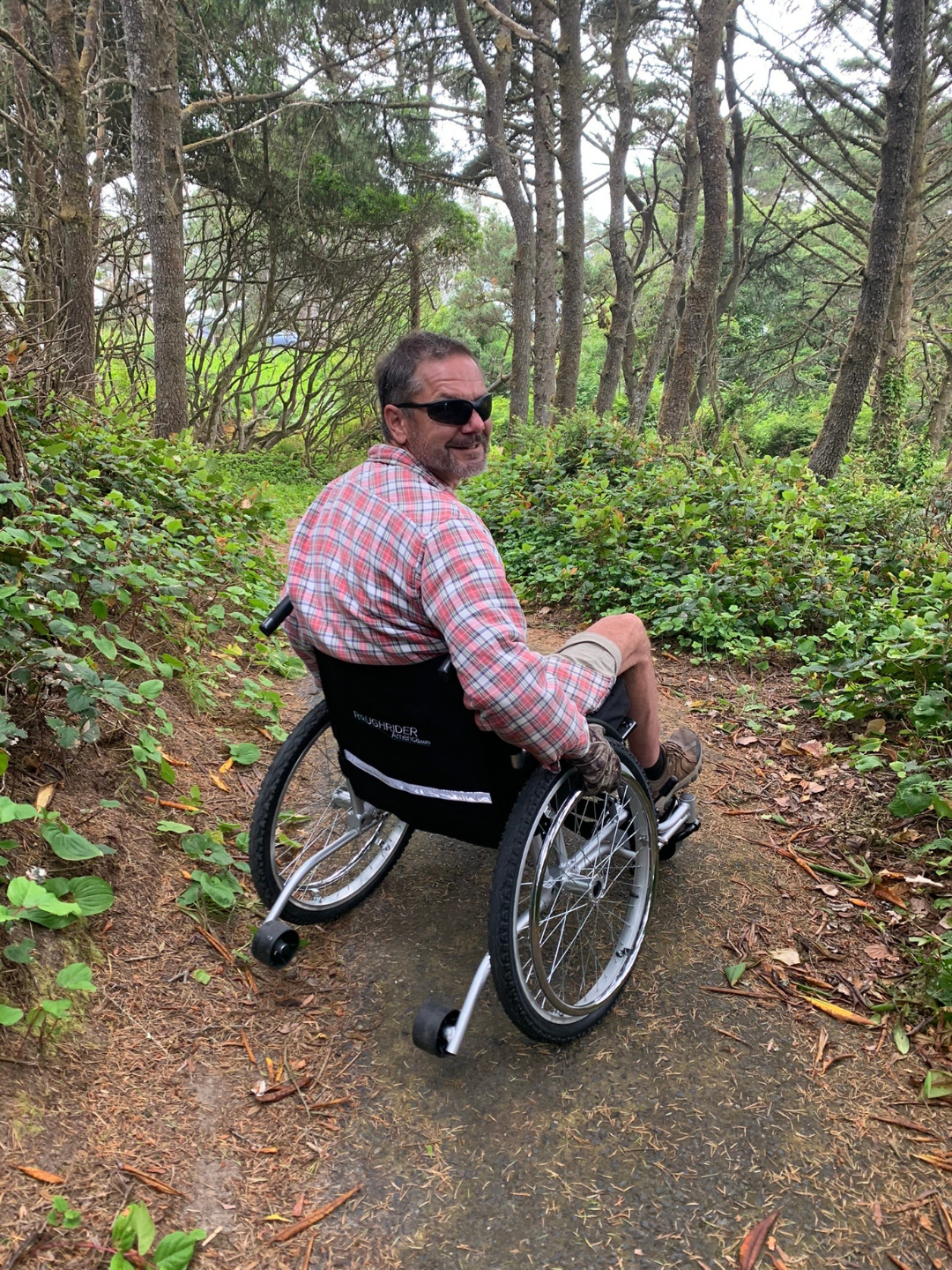
We’ve had the Aurora just over two years now. LOVE it. This thing can go where so many others can’t. We’ve used it from the cobblestone streets of Prague to the trails of Olympic National Park, and so many places in between. As to the first, cobblestone streets are a bear and conventional wheelchairs will perpetually have their front wheels lock between stones. We know, we tried it and spent most of our time pulling the old chair backwards. The Aurora tackles most of these inconveniences in stride. It doesn’t soften some of the bounciness, but so greatly reduces all those ejector-seat snags.
As to more off-road activities, well when one or both of you are National Park geeks, you have a lot of opportunities to test it out on all sorts of conditions. We have taken our Aurora to Alaska, along the boardwalks and back trails of Katmai National Park to witness the grizzlies feeding on salmon at Brooks Falls. It’s taken on trails at Hoh Rain Forest in Olympic National Park and many others. There will always be some potential challenges; large root snags, mud, deep sand or pea gravel. But most everything else, it can handle it. The Aurora allows us to go further and delve deeper than we would have otherwise.
Our daily lives are easier but we live in the burbs and that’s not too tough. What really has changed is that we can plan more travel than we ever might have.
Submitted by email — shared with permission
I bought the chair so that we can take my elderly mother, who still walks, with us to places that require too much walking for her. We used it in downtown Charleston, SC on both the asphalt and cobblestone surfaces. We also use it when we go somewhere with grass and trails. It works great on outdoor surfaces that a regular transport chair will not roll on. It has worked just fine on gravel and dirt walking trails with roots and other uneven areas. We push her in the chair; she doesn’t operate it herself. It’s only used as an all-terrain transport chair. I have not taken her on any steep hills because I don’t know if I could push it up a steep hill or control it going down a steep hill.
Submitted by email — shared with permission
I bought the RoughRider to be able to get my girlfriend outside and we have put many wonderful miles on it! Numerous trails and boardwalks mostly in Florida State parks and now that she can’t do that anymore I take her on a stroll through the neighborhood streets weekly, we could have not done any of it without this chair.
Submitted by email — shared with permission
Reviews submitted directly to Roughrider America. Names shown with the reviewer’s permission.
Posted on Google Whitney Lavender (WhItsComplex)
Trustindex verifies that the original source of the review is Google.
My RoughRider has been the best mobility purchase I’ve ever made! As a bilateral above-knee amputee who loves being outdoors, I spent almost a year researching chairs that could keep up with my adventures. Then I stumbled across RoughRider America on Facebook, and I’m so glad I did! Marc made ordering easy and even offered a discount that helped me get the chair I truly wanted and needed. A year and a half later, I’m still so glad he talked me into it! This chair has been to Mexico twice, including Chichén Itzá! It’s come along for kayaking, hunting, shooting my bow, dancing, and more. You name it, this chair has probably been there with me. People stop me all the time to ask where I got it and how they can get one. When I share the price, they’re even more impressed! I absolutely recommend RoughRider America. This chair has helped me do more of what I love—and I’ve got plenty more adventures planned!Posted on Google Melissa BrizeeI wanted to share my experience using the Aurora wheelchair. I have no affiliation with this company nor receive anything from this company. I am just a mom who was looking for a wheelchair for her son. For reference, my son is 20 years old, 6’ tall and 200 pounds. He suffers from a debilitating medical condition and intellectual disability. He is ambulatory though requires a wheelchair for any kind of significant outing. We enjoy going for a long walk in the neighborhood every evening. He does not have the intellectual capacity to propel the wheelchair himself, so I am the one pushing the wheelchair. We live in a neighborhood with sidewalks that are all torn up from tree roots and the typical wear and tear of an old neighborhood. We have been using a Karman wheelchair, which is fantastic for smooth surfaces; however terrible for street use. We were constantly either having to make a choice of walking in the middle of the street or up and down driveways, and turning around backwards so we could get over even the tiniest bump on the path. It was completely exhausting and destroying my hands and wrists. It was slowly turning our beautiful evening walks into a grudge… which led me onto my search for a wheelchair that could easily navigate uneven terrain. I didn’t need something fancy, but rather comfortable accessible and utilitarian that could help manage our daily life with more ease. I researched several models on the market, but after extensive talks with Marc from Rough Rider, I finally made the decision to purchase the Aurora wheelchair for my son. It has seriously been one of the most impactful decisions I’ve made, which is crazy considering it’s only a wheelchair. However, after using this chair for about a month, I can say that this wheelchair has truly changed our lives. We are able to easily and joyfully walk through the entire neighborhood, on the sidewalk with minimal extra effort. We have even gone on some trails which included piles of dirt, rock piles, gravel, slopes-a variety of mixed terrain, with relative ease. I did also opt for the extender so that it was easier for me to push the chair because the handles are low down. But with the extender it is at a comfortable level for me to push. For reference, I am 5’9” and of average build. The chair is comfortable for my son and neither of us experience the frustration that we’ve been having. I’m so grateful that this chair has been built, while accessible and not costing a complete fortune. It really has been a life changer for us. Update on this review. We’ve now been using the chair for 4 months-we have taken it on a roadtrip, went on hike trails, and it continues to be a fantastic chair-a true life-changerPosted on Google
 JoeI'm not a daily user but I think it's a well built chair and I've used it on different terrains, and it's held up nicely. It's on the heavy side, so it's not ideal for everyone, but it works for me and for my purposes.
Owner's reply
Hi. Thx for the review. We now have a much lighter weight version of the rough rider. It's called the aurora, and it weighs ten pounds less.Posted on Google Tim edwardsI bought this chair for my mom who has bad knees and still wants to get out and see things. It has made it easier for her to go off the beaten paths and see the tours of caves, and old historic sites. This chair is worth every penny. She loves it. Says its very comfortable and does not cut the circulation off in her legs like other chairs do.Posted on Google
 Battjd04I found the RoughRider wheelchair while scouring the internet for a wheelchair with its capabilities, and it delivered. Shortly after we got it, we put it together and flew down to Texas for a hunt at 3 Amigos Ranch. This thing did great going across the terrain in south Texas as well as when we tried to find the basement at the Alamo a few days prior. My friend I ordered it for said it’s very comfy and works great. Here’s a photo of us down in Texas using it.
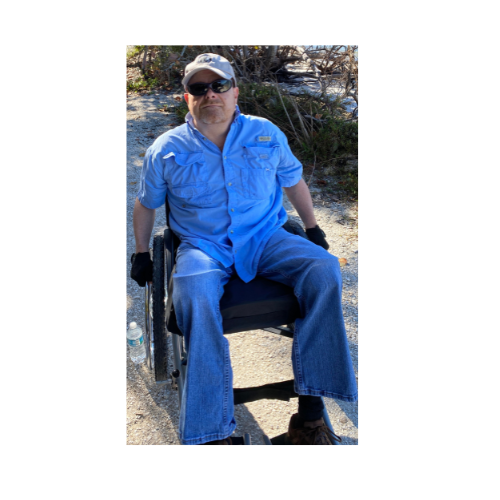
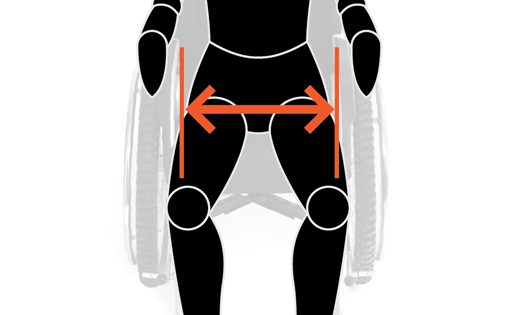
To find the distance between your hips, first position yourself seated with pelvis upright on a firm surface. Then, measure the distance between the widest points of the hips and thighs without compressing any tissue. Finally, record your measurements. It is important not to have a chair that is wider than necessary as it will be harder to push and may prevent you from passing through narrow doorways.
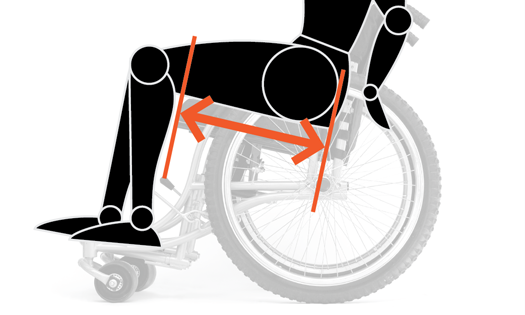
Position yourself seated upright on a firm surface. Measure the length of your upper leg, the distance from behind the knee to the back of the pelvis (back of your lower leg). Subtract 1/2” to find the maximum seat depth, to allow for space between the back of the knee/upper leg and seat fabric. Record the final measurement.
Your preferred backrest height is determined by your personal comfort level and physical ability. Whirlwind recommends, generally, that the top of the back support should fall just beneath the bottom of the shoulder blade. For less active riders who require more torso support, the back support should be higher, falling just beneath the armpit. Position yourself seated upright on a firm surface. Hold your hands flat against the surface you are sitting on. Measure the distance from the seated surface to the desired, most comfortable point for support on your back. To this number add the height of your cushion when you are sitting on it. Record the measurement.
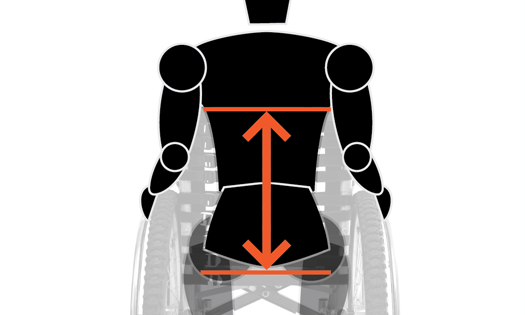
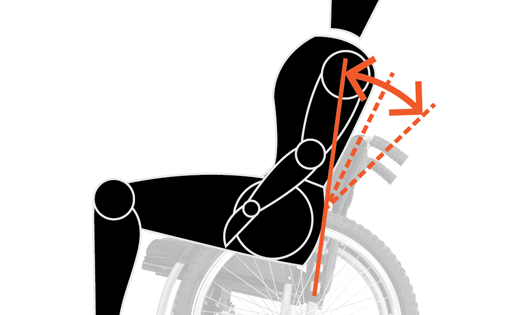
Backrest angles are determined by the torso control of the rider. Whirlwind recommends that those with less torso control, such as quadriplegics, sit with a backrest angled further backwards to avoid falling forward in a wheelchair. Those with more torso control, such as amputees, can sit with the backrest more upright. Proper backrest angle is best determined by an occupational therapist or healthcare professional. Although there is only one option – 8 degrees – in the drop-down list below, you can adjust the backrest angle by adjusting the backrest straps (i.e. looser at the bottom and tighter at the top for a more erect position).
Now please enter your measurements into the fields on the product page before ordering. For more information about measuring, please refer to the RoughRider Fitting Sheet. You are responsible for choosing the right chair for yourself. If you are uncomfortable with determining your wheelchair size, please consult a professional.
Nothing to show here right now